

Is Window Tinting Legal in Kenya? Rules, Shades and Costs
The question of whether windscreen tint legal requirements apply to private vehicles is important for every Kenyan motorist considering window tinting. Understanding whether windscreen tint legal restrictions affect your vehicle can help you avoid unsuitable installations and make an informed decision.
When researching whether windscreen tint legal requirements apply to your car, distinguish between private vehicles and public service vehicles. The rules are not identical, and motorists should understand the difference before choosing a film.
Is Windscreen Tint Legal for Private Cars in Kenya?
When asking whether windscreen tint legal restrictions apply to private cars, it is important to consider the applicable Traffic Rules and court decisions.
The 2014 High Court ruling overturned a blanket police directive against tinted windows on private vehicles. However, this does not mean that every type of windscreen tint is automatically acceptable.
If you are searching for windscreen tint legal guidance, consider visibility, reflective properties and the specific requirements applicable to your vehicle.
Windscreen Tint Legal Requirements for Different Windows
Understanding windscreen tint legal considerations starts with identifying the purpose of each vehicle window.
The front windscreen is essential for forward visibility. Front side windows help drivers observe surrounding traffic, while rear windows contribute to reversing and general awareness.
Before choosing a film, ask your installer whether the proposed application preserves visibility and meets applicable requirements.
How to Choose a Windscreen Tint That Meets Legal Requirements
Finding a suitable windscreen tint legal option involves more than choosing a percentage or shade.
Consider the following:
- Choose a film that preserves clear visibility.
- Avoid reflective window treatments.
- Ask about the manufacturer’s VLT specifications.
- Consider the original vehicle glass.
- Confirm current requirements before installation.
- Use an experienced professional installer.
Windscreen tint legal compliance should remain a priority even when privacy and appearance are your main reasons for tinting.
Does Windscreen Tint Legal Compliance Affect Tinting Prices?
Windscreen tint legal considerations can influence the type of film you select and the installation you request.
For example, a motorist interested in heat rejection may prefer a high-performance solar-control film rather than an extremely dark film.
When comparing car tinting prices, ask about film quality, heat rejection, UV protection and installation warranty. A suitable product should balance comfort, visibility and compliance.
Is Windscreen Tint Legal in Kenya?
The question of whether windscreen tint legal in Kenya requires understanding the difference between private vehicles and public service vehicles.
Under Rule 54A of Kenya’s Traffic Rules, a person must not drive or operate a public service vehicle fitted with tinted windows or a tinted windscreen. The rule defines tinted windows as shaded, coloured or treated in a way that prevents people or objects inside from ordinarily being seen clearly from outside.
This restriction applies to PSVs, including matatus and buses operating as public transport.
For private vehicles, the legal position is different. In July 2014, the High Court overturned a blanket police directive that sought to impound private vehicles with tinted windows. The court found that the directive went beyond the restrictions provided under the existing traffic regulations.
Therefore, private vehicle owners should not confuse the specific PSV restriction with a blanket prohibition on all private car window tinting.
However, other traffic requirements still matter. Rule 30(2) of the Traffic Rules requires windscreen tint legal and windows to remain free from materials with reflective properties. Rule 30(1) also requires vehicles to provide the driver with a full view of the road and traffic ahead.
There is no reason to assume that a particular dark tint percentage is automatically approved for every private vehicle. If you are unsure about a proposed shade, seek clarification from the relevant authorities before installation.
Windscreen vs Side and Rear Windows: What Are the Rules?
Different vehicle windows serve different purposes. The windscreen provides the driver’s forward view, while the side and rear windows contribute to visibility, passenger comfort and vehicle security.
Understanding these differences helps motorists select appropriate window film.
Windscreen Tinting
The windscreen tint legal is one of the most important parts of a vehicle’s visibility system. It allows the driver to see the road, pedestrians, traffic signs and other road users.
When considering windscreen tinting, prioritise:
- Clear visibility during the day and at night.
- Minimal glare and distortion.
- Non-reflective film.
- Compatibility with the original windscreen glass.
- Compliance with applicable vehicle safety requirements.
A very dark film across the windscreen can make it difficult to identify pedestrians, cyclists and road hazards, particularly in poorly lit areas.
If you want additional heat protection, ask about suitable high-performance films that reduce solar heat without unnecessarily darkening the driver’s view.
Front Side Windows
The front side windows help drivers observe pedestrians, motorcycles and vehicles approaching from either side.
A suitable film should preserve good visibility when checking mirrors, changing lanes, parking and navigating busy roads.
Avoid choosing a shade based solely on appearance. A film that looks attractive from outside may reduce visibility from inside, especially at night.
Rear Side Windows
Rear side windows are commonly tinted to improve passenger privacy and reduce sunlight entering the cabin.
Before installation, consider how the shade affects visibility when reversing, parking and checking surrounding traffic.
If your vehicle has rear passenger windows, you can discuss different film options with a professional installer.
Rear Windscreen
The rear windscreen also contributes to visibility, particularly when reversing or changing lanes.
Some vehicles have rear defroster lines or integrated antenna systems. A professional installer should take care not to damage these components when applying or removing window film.
Always check that the finished installation does not create unnecessary visibility problems.
What Are the Different Car Tint Shades?
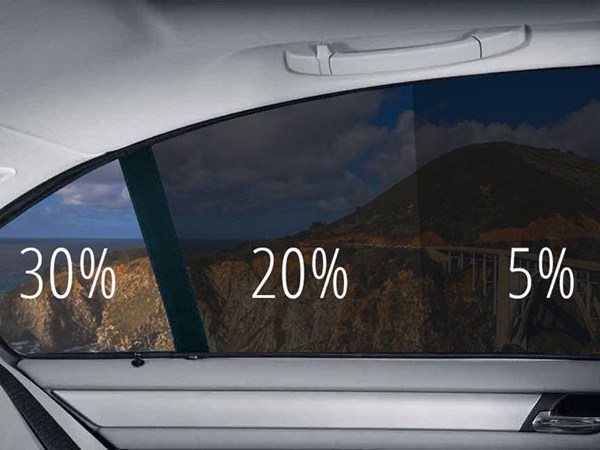
Car window tint shades are commonly described using Visible Light Transmission (VLT).
VLT refers to the percentage of visible light that passes through the glass and film. A higher VLT percentage means more light enters the vehicle, while a lower percentage means the window appears darker.
Here are some common tint categories.
70% VLT Tint
A 70% VLT film allows approximately 70% of visible light through.
It is a relatively light option for motorists who want a subtle appearance while retaining good visibility.
50% VLT Tint
A 50% VLT film allows approximately half of the visible light through.
It offers a balance between a slightly darker appearance and light transmission. The final result depends on the original vehicle glass.
35% VLT Tint
A 35% VLT film allows 35% of visible light through.
It provides a more noticeable shaded appearance and greater privacy than lighter films.
20% VLT Tint
A 20% VLT film allows considerably less visible light through.
It creates a darker appearance and may affect visibility, particularly at night. Motorists should carefully consider where it is installed and whether it is suitable for their vehicle.
5% VLT Tint
A 5% VLT film is extremely dark and is often associated with limousine-style privacy.
It allows very little visible light through and can make it difficult to see outside the vehicle, especially in low-light conditions.
Important: These percentages describe light transmission, not official Kenyan legal limits. They should not be interpreted as NTSA-approved shade categories. Also, the final VLT is affected by the original glass. Applying a 50% film to glass that already blocks some visible light produces a darker combined result.
What Affects Car Window Tinting Prices in Kenya?
Car tinting prices in Kenya vary depending on the vehicle, film quality, number of windows and complexity of installation.
There is no single price that applies to every car. A small hatchback, a saloon, an SUV and a large vehicle may require different quantities of film and installation time.
Here are the main factors that influence the cost.
1. Type and Quality of Window Film
The quality of the film is one of the biggest factors affecting car tinting prices.
Common options include:
- Dyed window film: A basic option that provides shading and privacy.
- Carbon window film: Offers a darker appearance and improved heat rejection compared with many basic dyed films.
- Ceramic window film: Uses ceramic technology to provide heat and UV protection without relying entirely on a dark shade.
- Advanced solar-control film: Designed to reduce solar heat and improve cabin comfort.
Higher-performance films generally cost more because of their materials and performance characteristics.
2. Vehicle Size and Model
The vehicle’s size determines how much film is required.
For example, an SUV may require more material than a small hatchback. Vehicles with unusually shaped windows or complex rear windscreens may also require additional fitting work.
The car’s make, model and year can therefore influence the final quotation.
3. Number of Windows Being Tinted
Some motorists prefer tinting all suitable windows, while others only want selected windows covered.
The quotation may change depending on whether you need:
- Front side window film.
- Rear side window film.
- Rear windscreen film.
- Other approved window-film applications.
Ask your installer to itemise the work so you understand what is included.
4. Film Performance and Features
Not all window films offer the same level of protection.
Some are designed mainly for privacy, while others focus on heat rejection, UV protection and glare reduction.
Premium ceramic films may cost more than standard dyed films but can offer better solar-control performance.
5. Installation Quality
Professional installation contributes to the overall cost.
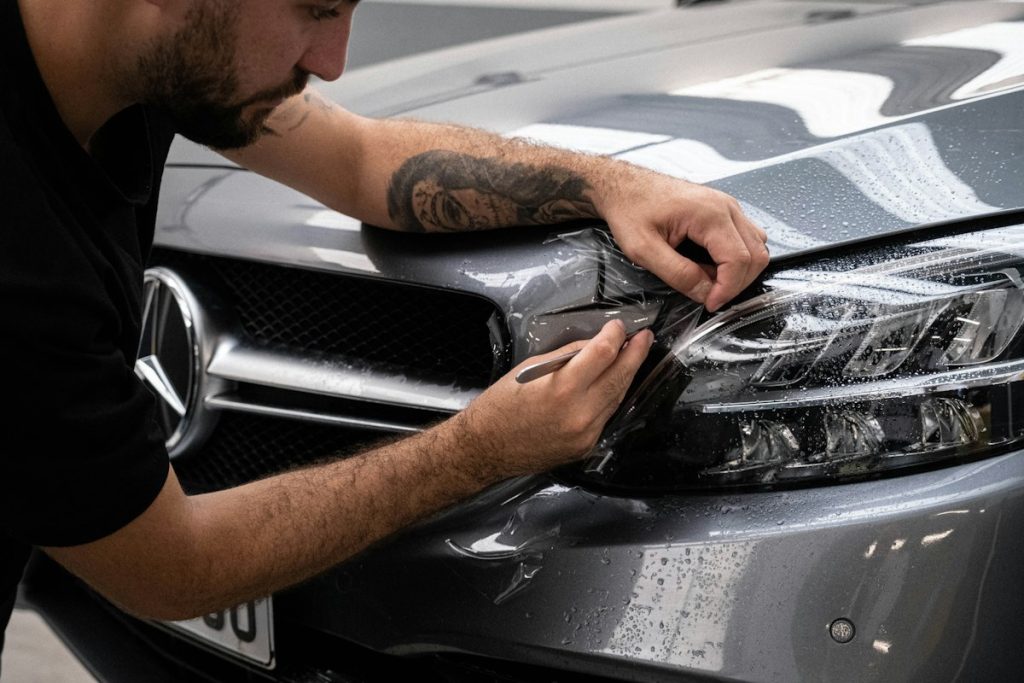
Proper installation requires accurate measurements, careful cutting, clean glass surfaces and controlled application to minimise bubbles, creases and peeling.
A cheaper installation may become expensive if the film needs to be removed and replaced because of poor workmanship.
How Much Is Tinting Car Windows in Kenya?
The best way to establish how much tinting car windows costs is to request a quotation based on your specific vehicle and preferred film.
Instead of comparing prices alone, ask whether the quotation includes:
- The film brand and type.
- The number of windows covered.
- Professional fitting.
- Warranty information.
- After-sales support.
- Any additional charges.
For an accurate car tinting price, provide the installer with your vehicle’s make, model and year. You can also share photographs of the windows to help determine the appropriate film and installation requirements.
Why Should You Install Quality Car Window Tint?
Window tinting offers several benefits beyond improving the appearance of a vehicle.
Reduced Heat Build-Up
Kenya experiences strong sunlight, particularly during warmer months. Vehicle interiors can become uncomfortable when parked outdoors.
Quality solar-control window film can reduce the amount of solar heat entering the cabin, helping improve passenger comfort.
UV Protection
Some high-quality window films are designed to block a significant proportion of ultraviolet radiation.
This can help protect vehicle occupants and reduce sun-related fading of seats, dashboards and other interior materials.
Always check the manufacturer’s specifications for the film’s actual UV protection performance.
Reduced Glare
Sunlight and reflections from surrounding vehicles can make driving uncomfortable.
Suitable window film can reduce glare, although the shade must still allow adequate visibility.
Improved Privacy
Tinted windows make it more difficult for people outside the vehicle to see into the cabin.
This can provide additional privacy for passengers and personal belongings.
However, window tint should not be treated as a substitute for proper vehicle security.
Better Interior Appearance
A professionally installed tint can give a vehicle a clean, uniform appearance.
Choosing a suitable shade can complement the vehicle’s colour and overall design.
How Long Does Professional Window Tinting Take?
The time required for window tinting depends on the vehicle’s size, the number of windows and the complexity of the installation.
A straightforward installation may take a few hours, while larger vehicles or more complicated jobs may take longer.
The process generally involves:
- Inspecting the vehicle and confirming the required film.
- Cleaning the windows thoroughly.
- Measuring and cutting the film.
- Applying the film using professional installation techniques.
- Removing air and excess moisture.
- Inspecting the finished work.
After installation, the film needs time to cure properly. Follow the installer’s instructions on when to roll down the windows and when to clean them.
Small amounts of haze or moisture may be visible during the curing period, depending on the film and installation conditions.
How to Choose the Right Window Tinting Service in Kenya
Choosing the right installer is just as important as selecting the film.
A professional window tinting service should explain the available products, installation process and after-sales support before starting work.
Consider the following factors:
1. Film quality: Ask about the brand, specifications, heat rejection and UV protection.
2. Installation experience: Choose technicians familiar with different vehicle models and window shapes.
3. Visibility: Prioritise a shade that maintains good visibility, especially on windows important for driving.
4. Warranty: Confirm whether the film and installation are covered by a warranty.
5. Pricing transparency: Request a quotation that explains the film type, windows covered and fitting charges.
6. After-sales support: Choose a provider who can assist if the film develops bubbles, peeling or other installation problems.
Get Professional Car Window Tinting at MPPS Accessories
If you are considering car window tinting in Kenya, MPPS Accessories can help you select a suitable window film for your vehicle.
The service focuses on professional fitting, non-reflective films and advice on sensible shades for front windows.
Whether you drive a saloon, hatchback or SUV, you can enquire about available tinting options and request a quotation based on your vehicle.
MPPS Accessories offers window tinting at its branches:
- Mombasa Road: Sameer Business Park, Block B-2.
- Lavington: Lavington Business Hub, opposite Lavington Mall.
You can share your vehicle’s make, model and year to help the team recommend a suitable option and confirm the current price.
For additional vehicle care solutions, explore the MPPS car detailing services.
Ready to improve your vehicle’s comfort and appearance? Visit the MPPS Window Tinting service page to enquire about professional installation.
Frequently Asked Questions About Windscreen Tint Legal Rules
Is windscreen tint legal in Kenya for private vehicles?
Windscreen tint legal requirements differ between private vehicles and PSVs. The 2014 High Court ruling overturned a blanket police directive against tinted private vehicles, but visibility and other traffic requirements remain relevant.
Is windscreen tint legal for matatus?
No. Rule 54A of Kenya’s Traffic Rules prohibits tinted windows and windscreens on public service vehicles.
What percentage of tint is windscreen tint legal?
There is no basis for treating a particular VLT percentage as universally approved for every vehicle in Kenya. Check the applicable requirements before installation.
Can dark window tint affect windscreen tint legal compliance?
Very dark films can compromise visibility. Motorists should consider the driver’s ability to see the road, particularly at night.
Where can I get advice about windscreen tint legal requirements?
Consult the relevant authorities and an experienced professional windscreen tint legal installer before choosing a film.